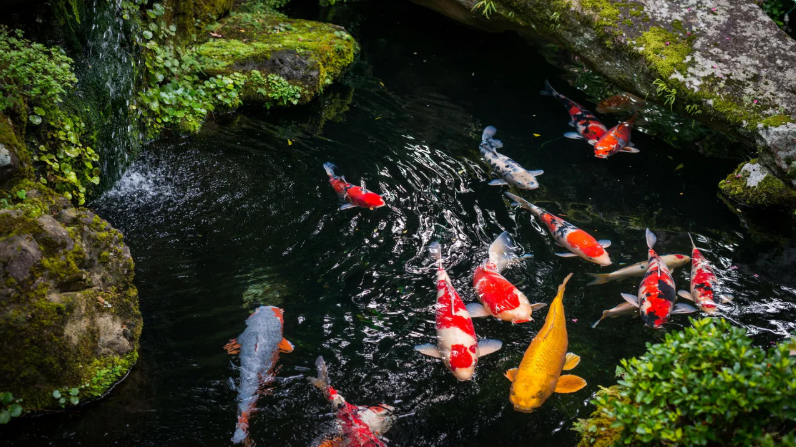
Signs of a healthy koi
A healthy koi will usually:
- Swim smoothly and actively
- Have clear eyes and intact fins
- Eat eagerly
- Hold its fins open rather than clamping them
- Have good colour and a smooth body shape
- Breathe normally (not constantly gasping at the surface)
Keeping koi healthy
- Quarantine new fish before adding them to the pond
- Ensure your local Koi dealer when importing and selling Koi take the correct measures in their own quarantine before selling Koi.
- Avoid overcrowding
- Feed good-quality koi food appropriate to water temperature
- Remove waste and maintain filtration
- Observe fish daily so changes are noticed early
Buying Healthy Koi
As mentioned above when buying Koi and ensuring they are healthy always check with your dealer that the imported Koi have been correctly quarantined prior to the purchase, any reputable dealer will have no issues sharing their own quarantine process.
A dealers quarantine process should be similar to the below:
A professional koi dealer’s quarantine (QT) process is designed to protect existing stock, identify disease, and gradually adapt koi to the customer’s pond conditions. The exact protocol varies by dealer, but a good system usually includes biosecurity, observation, parasite screening, and controlled temperature changes (“heat ramps” and “cold ramps”).
1. Initial quarantine after arrival
When koi arrive from a breeder or importer:
- Separate system: New koi should go into a dedicated quarantine facility, not the main sales ponds.
- Water matching: Temperature, pH, and hardness should be matched gradually to reduce transport shock.
- Rest period: Fish are allowed to settle before treatments are considered.
- Observation: Appetite, swimming behaviour, respiration, skin condition, and waste are monitored daily.
- Testing: Dealers commonly check for parasites using skin and gill scrapes examined under a microscope.
A typical quarantine period is often 4–8 weeks, but many high-quality dealers hold valuable koi for longer.
2. Heat ramping (warming quarantine)
A heat ramp is used to increase water temperature gradually, often to improve immune function and expose temperature-dependent parasites.
A common approach:
- Increase temperature slowly, often around 1–2°C per day (sometimes slower depending on fish condition).
- Bring koi into a controlled range, commonly around 22–25°C for active monitoring.
- Maintain excellent oxygenation because warm water holds less oxygen.
- Feed carefully as metabolism increases.
Why heat?
- Koi immune activity generally improves in warmer water.
- Some parasites reproduce more quickly at higher temperatures, making them easier to detect and treat.
- It helps reveal problems before fish are sold.
A dealer may use a warm quarantine period to look for:
- Skin flukes
- Gill flukes
- Costia and other protozoans
- Bacterial issues that appear under stress
3. Cold ramping (cooling quarantine)
A cold ramp gradually lowers koi back toward cooler pond temperatures.
A common approach:
- Reduce temperature slowly, often around 1–2°C per day or less.
- Avoid sudden drops, which can suppress immunity.
- Maintain strong oxygen levels and stable water chemistry.
Why cold ramp?
- It prepares koi for customers buying in cooler seasons.
- It reduces temperature shock when moving fish outdoors.
- It allows the dealer to confirm fish remain healthy outside peak warm conditions.
4. Example professional quarantine cycle
A dealer might use a cycle like:
Week 0
- Receive koi
- Isolate
- Stabilise water
- Check for obvious problems
Weeks 1–2
- Observe feeding and behaviour
- Microscopic checks
- Treat only if needed
Weeks 2–5
- Controlled heat ramp
- Monitor closely
- Repeat parasite checks
Weeks 5–6+
- Cool ramp if appropriate
- Confirm stable health
- Move to sales system only when cleared